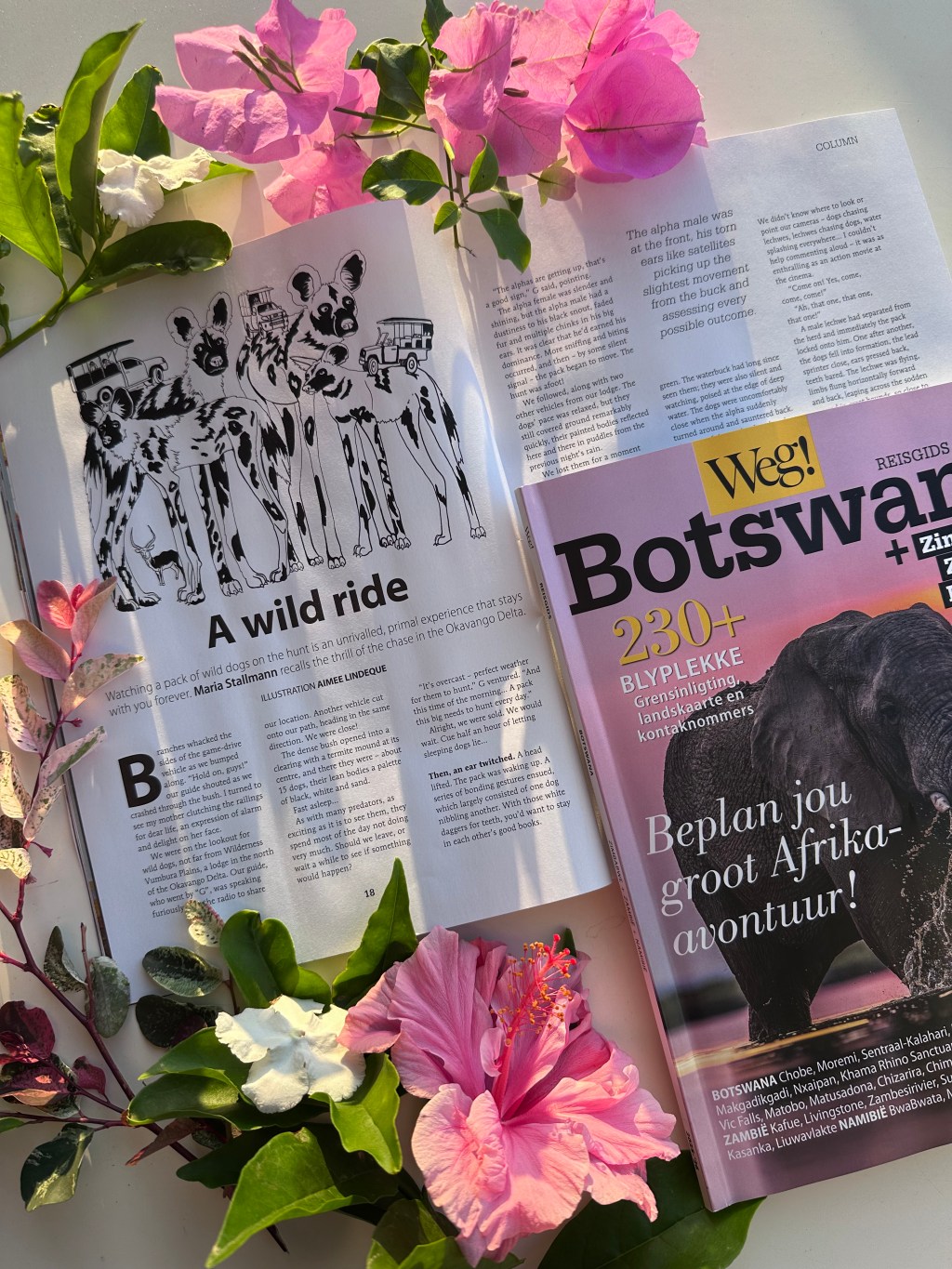
(As published in the Botswana Special Edition of bilingual magazine Weg!/go! in October 2025)
(All photos my own)
Watching a pack of wild dogs on the hunt is an unrivalled, primal experience that stays with you forever. Maria Stallmann recalls the thrill of the chase in the Okavango Delta.
Branches whacked the sides of the game-drive vehicle as we bumped along. “Hold on, guys!” our guide shouted as we crashed through the bush. I turned to see my mother holding onto the railings for dear life, an expression of simultaneous alarm and delight on her face.
We were on the lookout for hunting wild dogs, not far from Wilderness Vumbura Plains, a lodge in the north of the Okavango Delta. Our guide, who went by “G”, was speaking furiously over the radio to share our location. Another vehicle cut onto our path, heading in the same direction. We were close!
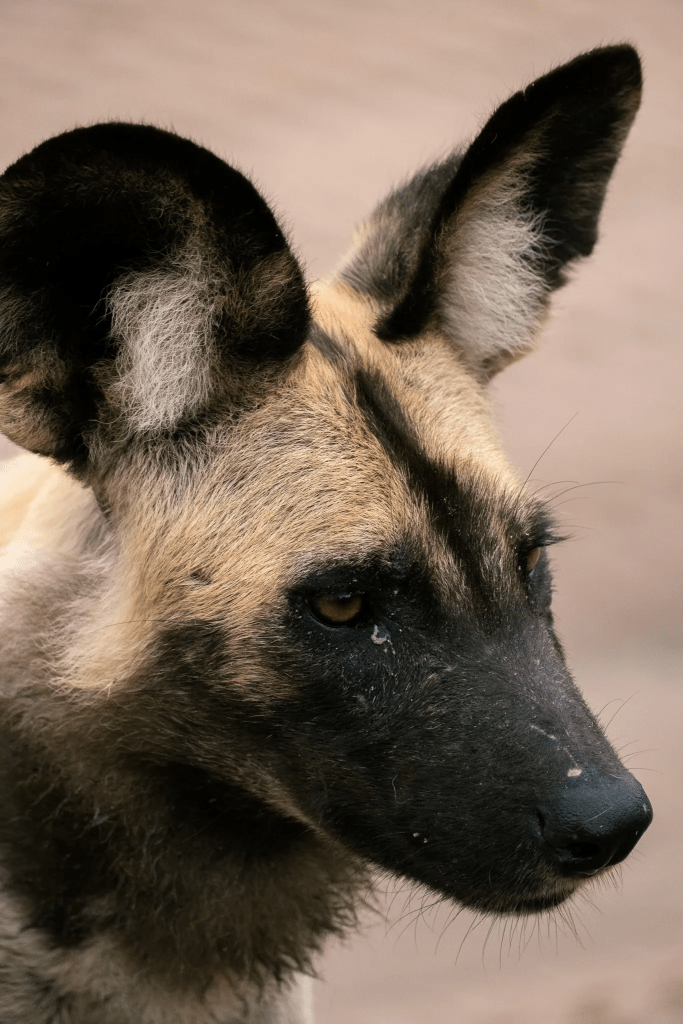
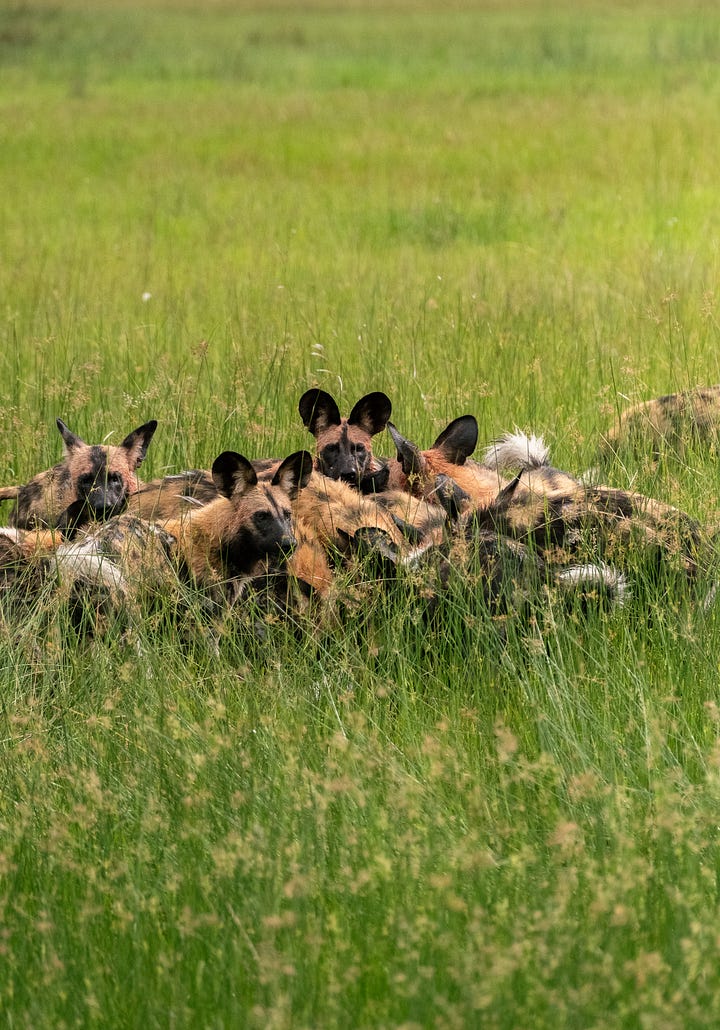
The dense bush opened into a clearing with a termite mound at its centre, and there they were – about 15 dogs, their lean bodies a palette of black, white and sand.
Fast asleep…
As with many predators, as exciting as it is to see them, they spend most of the day not doing very much. Should we leave, or wait a while to see if something would happen?
“It’s overcast – perfect weather for them to hunt,” G ventured. “And this time of the morning… A pack this big needs to hunt every day.”
Alright, we were sold. We would wait. Cue half an hour of letting sleeping dogs lie…
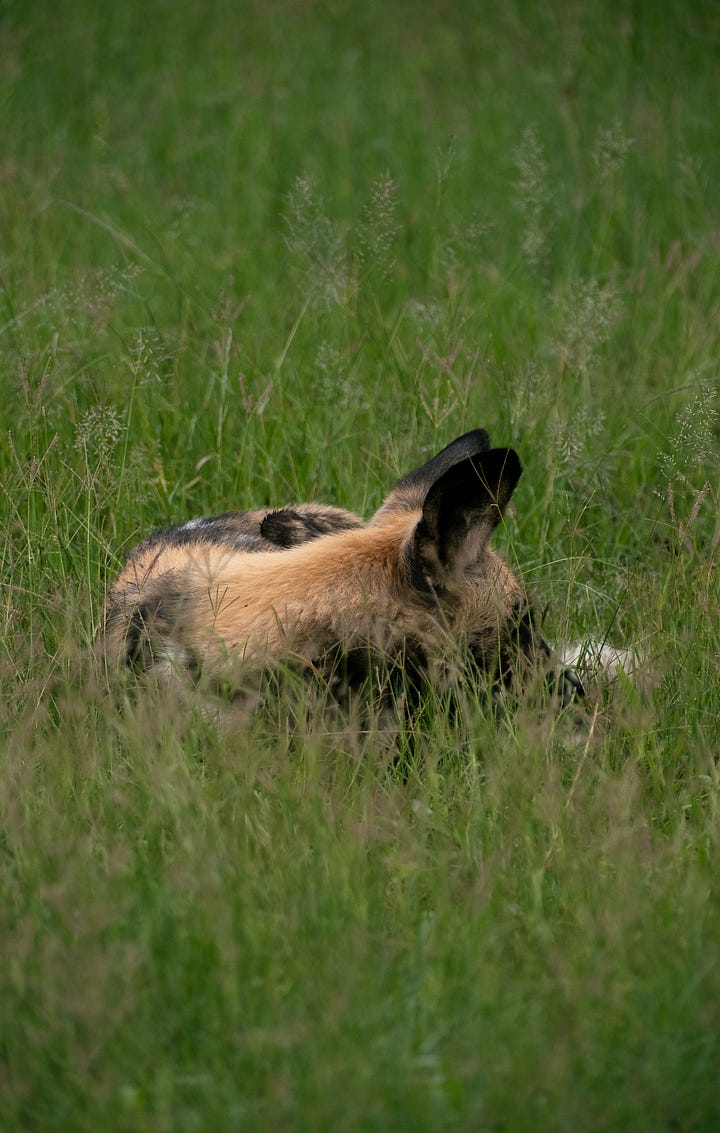
Then, an ear twitched. A head lifted. The pack was waking up. A series of bonding gestures ensued, which largely consisted of one dog nibbling another. With those white daggers for teeth, you’d want to stay in each other’s good books.
“The alphas are getting up, that’s a good sign,” G said, pointing.
The alpha female was slender and shining, but the alpha male had a dustiness to his black snout, faded fur and multiple chinks in his big ears. It was clear that he’d earned his dominance. More sniffing and biting occurred, and then – by some silent signal – the pack began to move. The hunt was afoot!
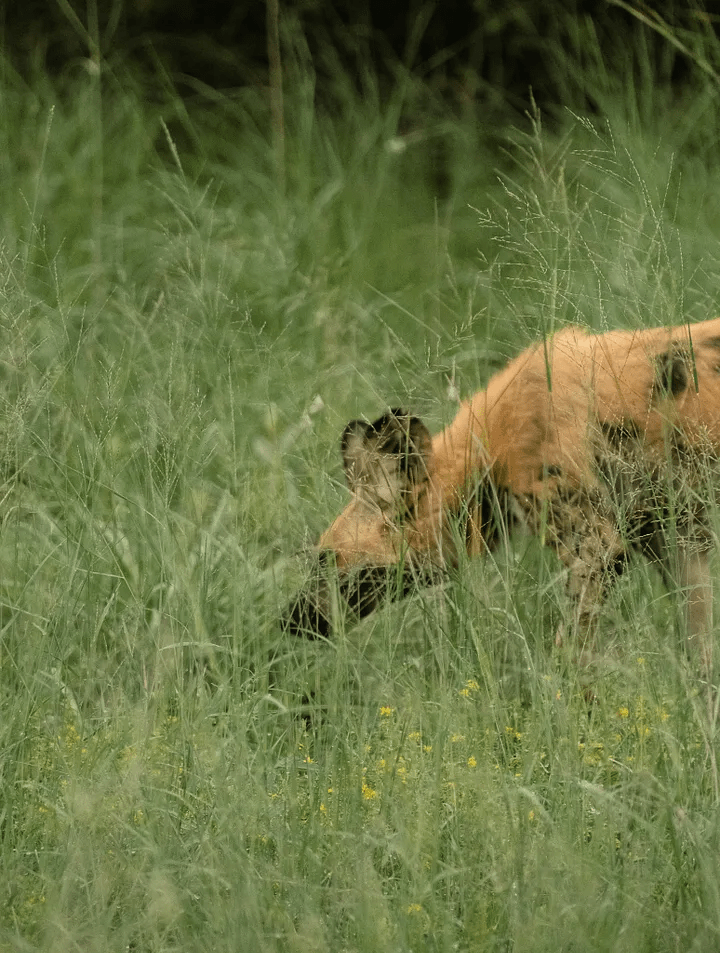
We followed, along with two other vehicles from our lodge. The dogs’ pace was relaxed, but they still covered ground remarkably quickly, their painted bodies reflected here and there in puddles from the previous night’s rain.
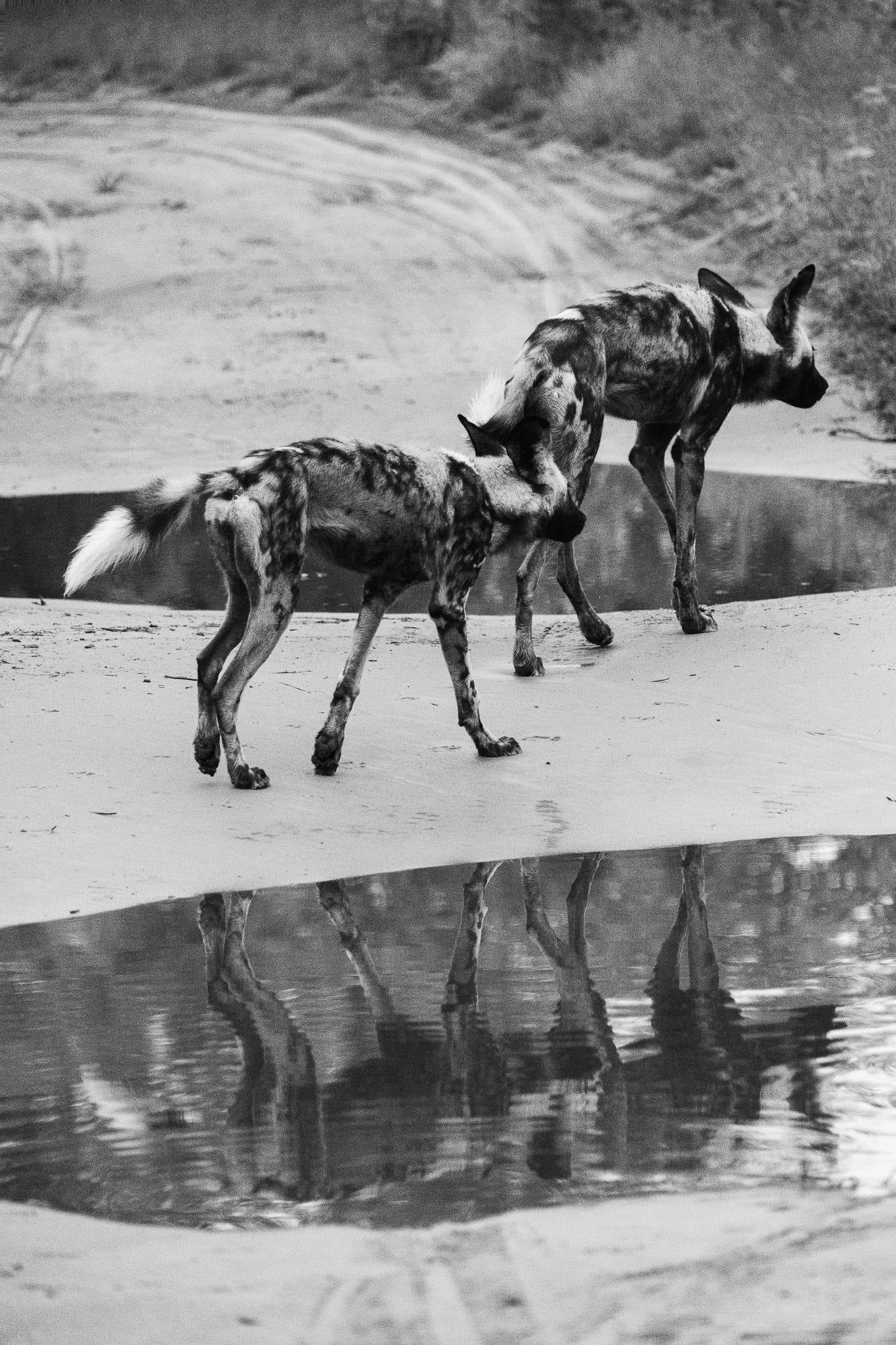
We lost them for a moment between trees, and when we came upon them again, five or more dogs had joined, fresh from a hunt elsewhere, regurgitating some of their meal and bonding with the others in high-pitched whimpers. The pack now numbered about 22 animals. Their excitement soon morphed into focus as they trotted off into the undergrowth.
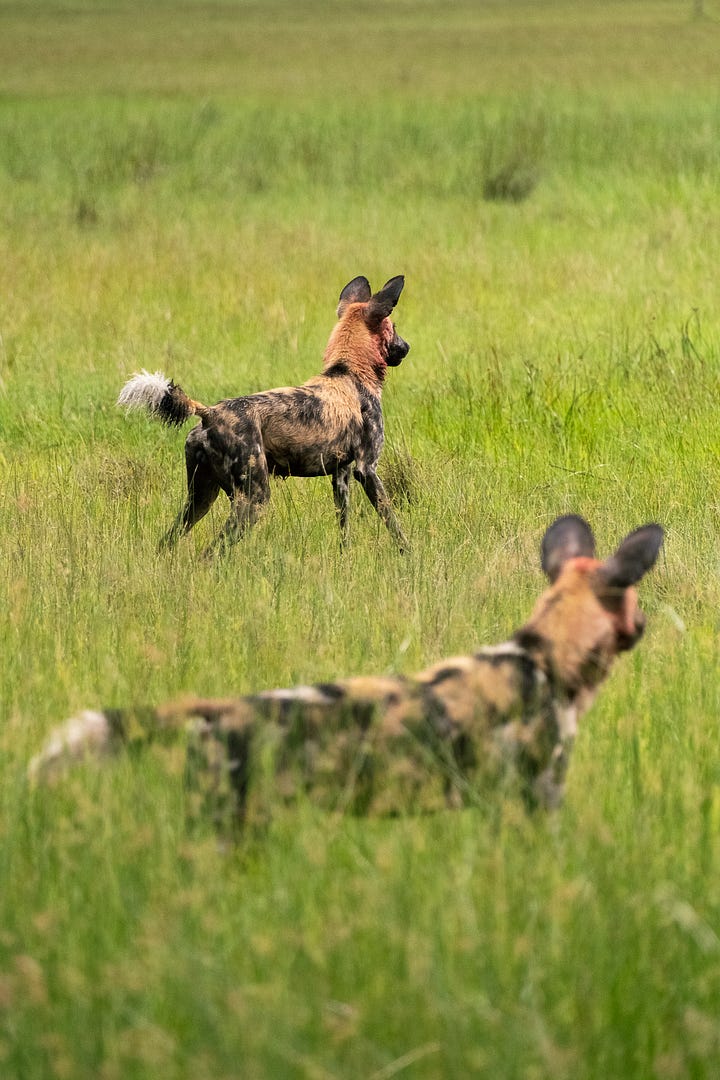
“You see that trot – that’s good. It means they’re in full hunting mode,” G explained as he followed them into a swampy area dense with reeds. A lone sausage tree, on its termite mound island, rose from the water. In its shade stood three waterbuck. There were three more out in the reeds; their white-ringed bums like bull’s-eyes for the dogs. All 22 snouts were darts poised to fly. The alpha male was at the front, his torn ears like satellites picking up the slightest movement from the buck and assessing every possible outcome. Behind him, the canine phalanx hummed with focus, edging incrementally nearer. Silent, watching.
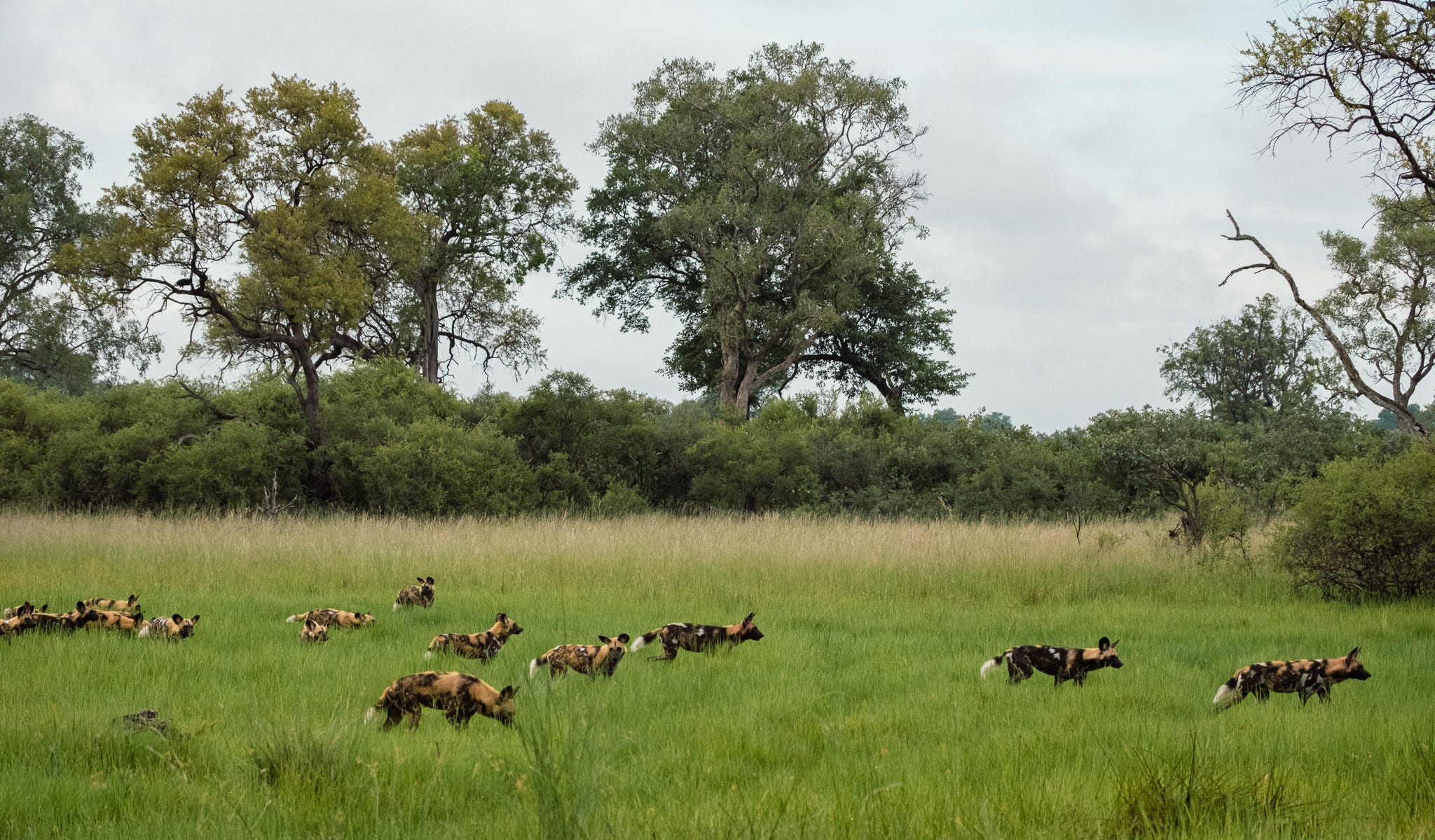
Around them swelled a sea of green, crested by their white tails. The waterbuck had long since seen them; they were also silent and watching, poised at the edge of deep water. The dogs were uncomfortably close when the alpha suddenly turned around and sauntered back. The rest of the pack relaxed and followed suit, weaving nonchalantly between our vehicles.
“Good decision,” G said. “They would never have caught those waterbuck – when they’re this close to the water, they can easily escape.”
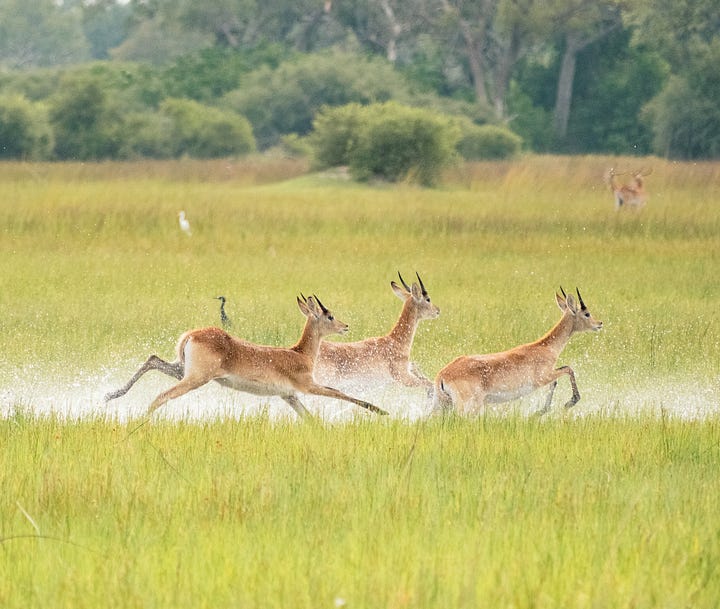
The dogs bounced off through the grass, and we followed. We cruised past a lucky lechwe grazing in a meadow of white flowers, to the edge of a floodplain. The dogs were just ahead, and further on, there was a bigger herd of lechwes. The way G explained it, the landscape to the right was covered in shallow water thanks to recent rain; to the left was an area of permanent, deeper water. The lechwes had seen the dogs and realised that to escape, they’d have to move from the shallows into that deep water. But the dogs blocked the way…
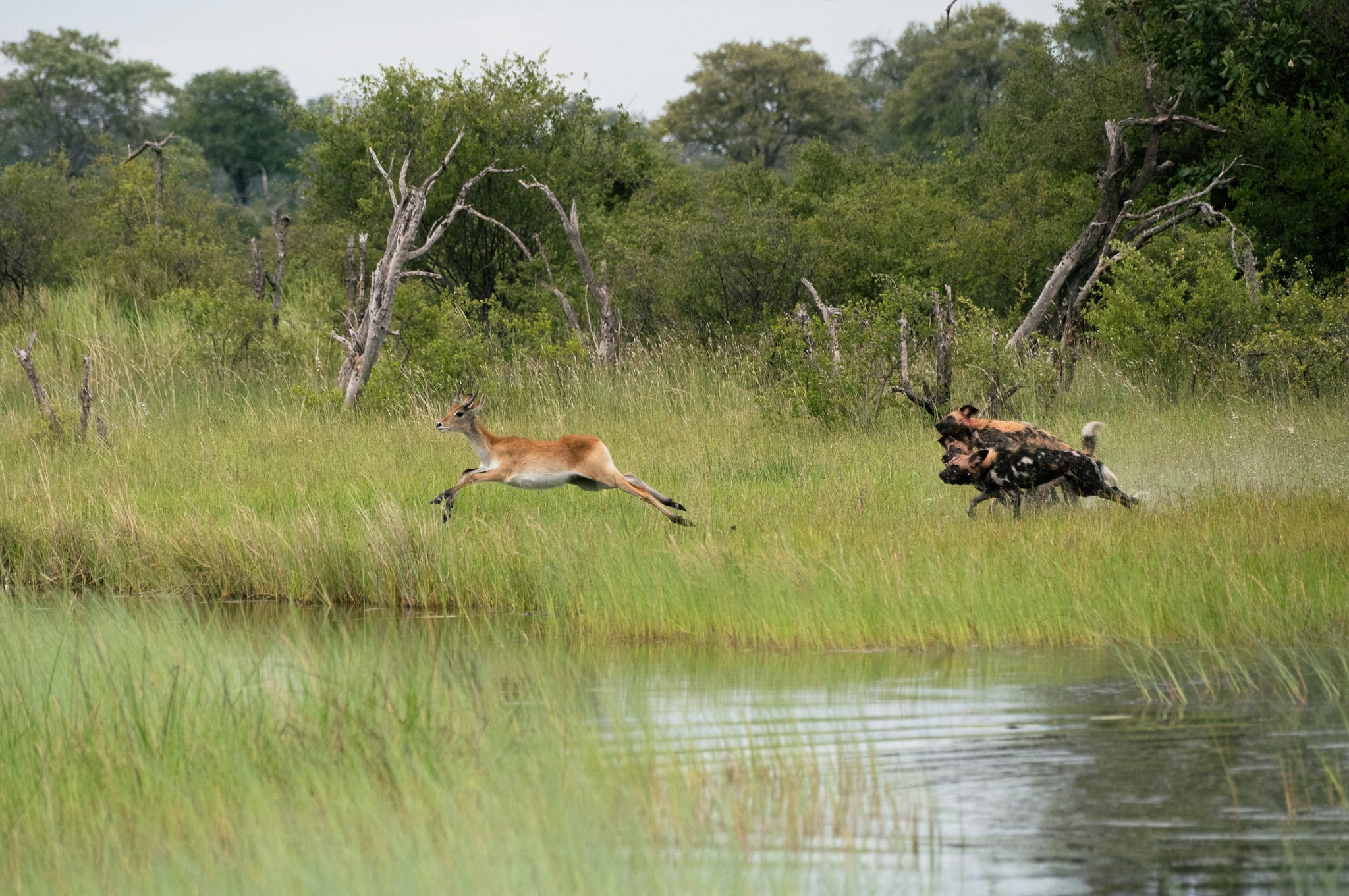
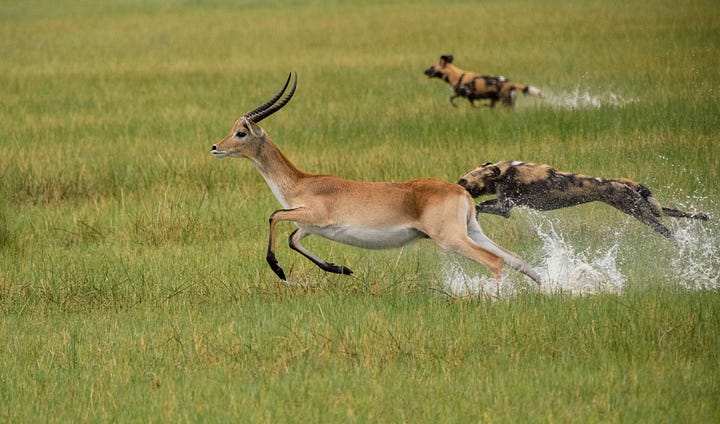
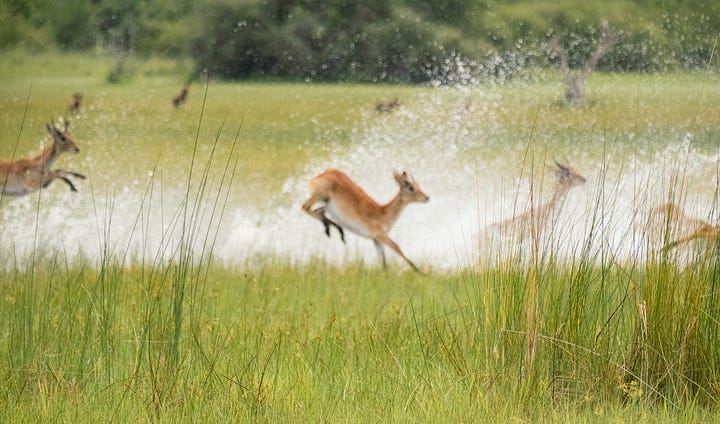
The lechwes made a dash for it. One dog, possibly their fastest runner, sprinted ahead, following closely behind the antelope and sending them into a panic. The pack split into multiple battalions, each trying for a different buck. We didn’t know where to look or point our cameras – dogs chasing lechwes, lechwes chasing dogs, water splashing everywhere… I couldn’t help commenting aloud – it was as enthralling as an action movie at the cinema.
“Come on! Yes, come, come, come!”
“Ah, that one, that one, that one!”
A male lechwe had separated from the herd and immediately the pack locked onto him. One after another, the dogs fell into formation, the lead sprinter close, ears pressed back, teeth bared. The lechwe was flying, limbs flung horizontally forward and back, leaping across the sodden ground in great bounds, so close to the safety of water… But just before salvation, the dogs pounced and took him down.
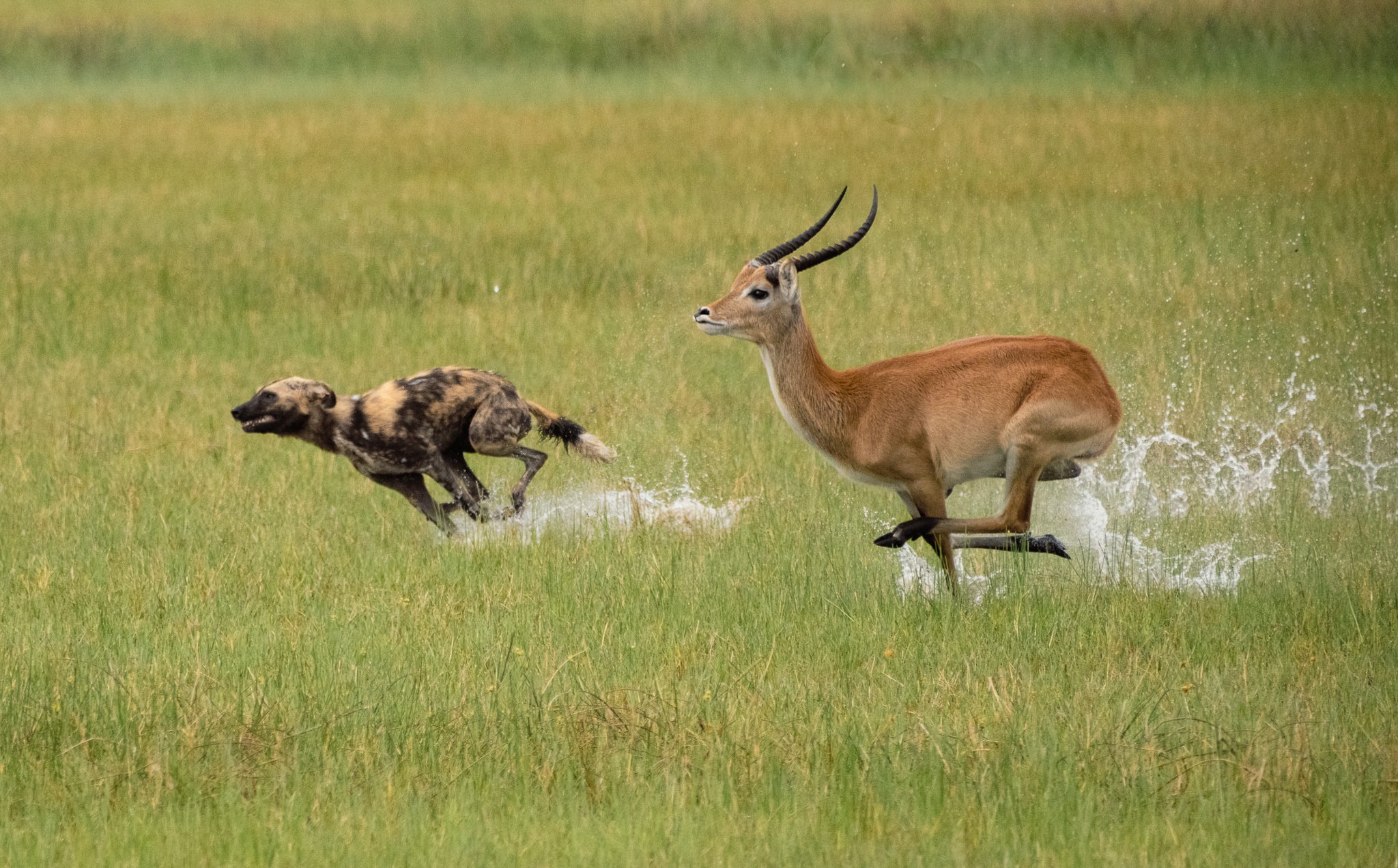
Immediately, G slammed the vehicle into gear and we hurtled across the floodplain towards the kill.
“Hold on, guys!” he yelled as he went full Dakar Rally mode, crashing into a puddle, spray raining down on us. “Sorry, guys, sorry, sorry!”
But he didn’t slow down. He was just as excited as we were. We skidded to a halt next to the scene.
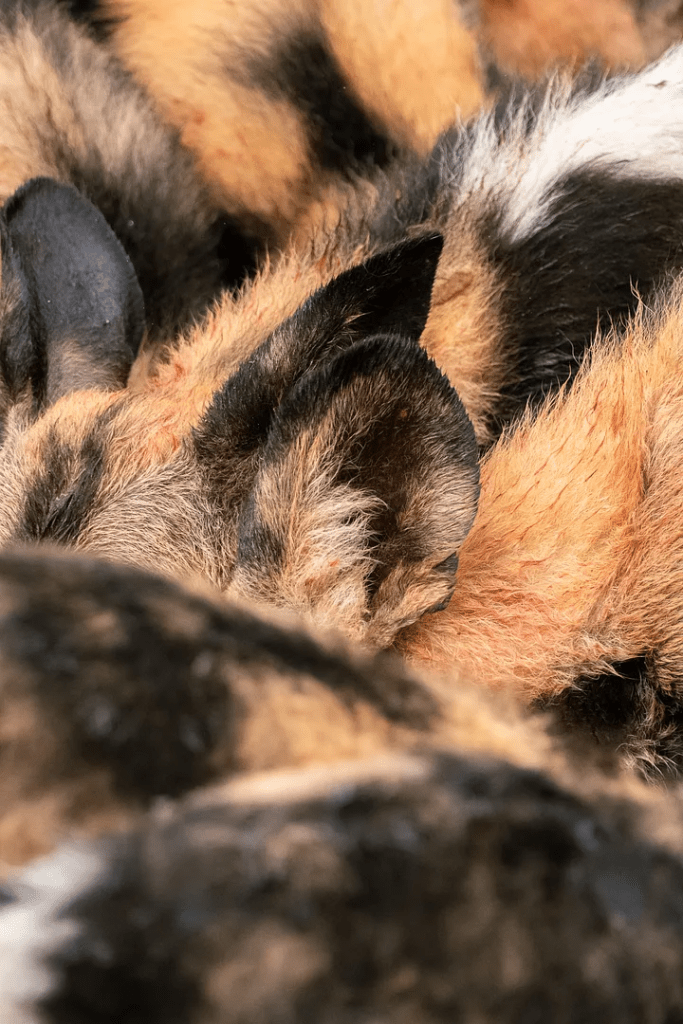
All 22 dogs were piled on top of the lechwe, ripping him apart in an ecstasy of shrill cries. Three had him by the snout and neck, others by the hind legs and still more were tearing at his stomach. The lechwe was still alive, still bleating, even when – in a sudden squelch of brilliant red – his stomach split.
Then he was silent and so were the dogs. All we could hear was the splashing of water as they tousled with his corpse. For a moment I saw the lechwe’s face between the flurry of legs, and his eye looked straight at me – and blinked.
 Maria Stallmann
Leave a comment