As published in the Spring 2026 print edition of YOLO Journal. Thank you to Alex Postman for making it happen! (All photos mine, both digital and film)
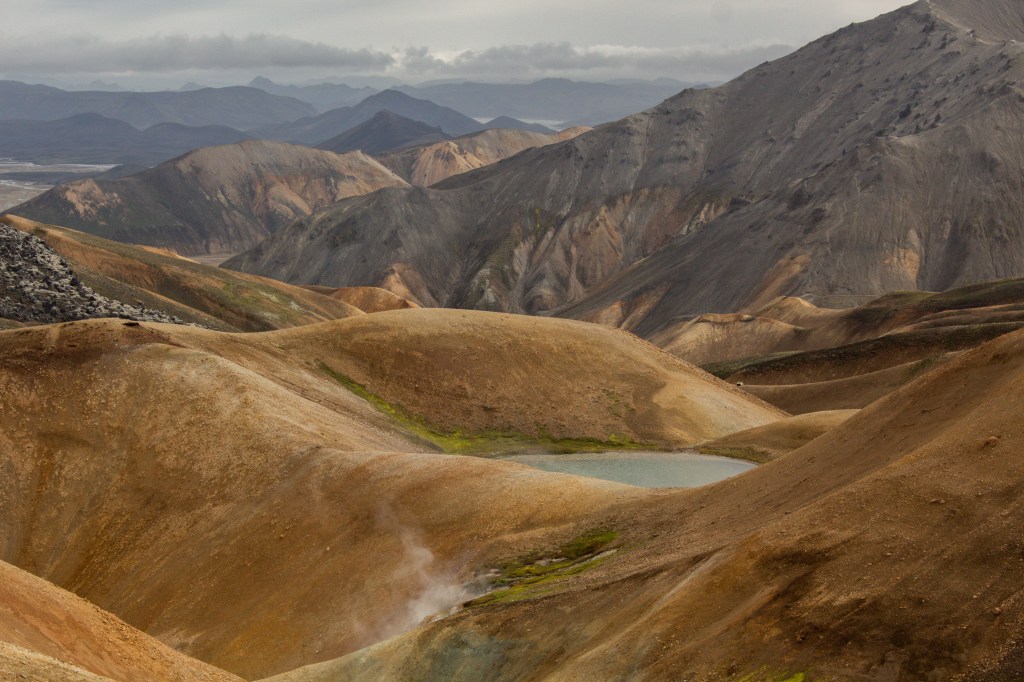
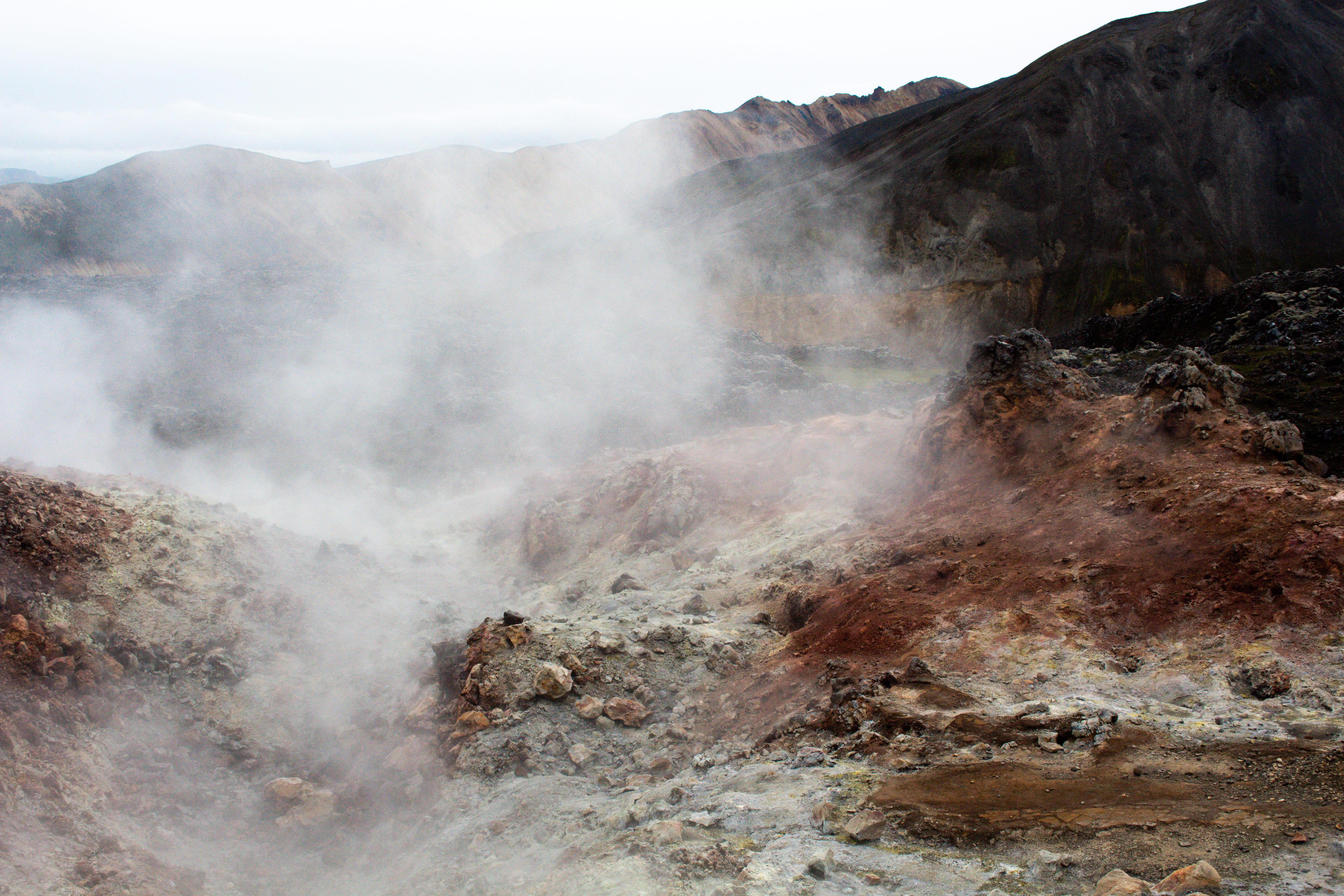
Here, the earth’s heart beats close beneath its skin. You can see its arteries pulsing with heat, rivers turning into a bubbling, boiling mass. Plumes of steam erupt from the toothed maws of crevasses, ringed in vivid yellow and orange sulphur. Banks of lush grass frame a gently steaming pool, sheep grazing on the slope behind.
This is Landmannalaugar, in Iceland’s Fjallabak Nature Reserve. It is the starting point for the famous Laugavegur Trail, which traces 55km of wilderness in southern Iceland. My parents and I are here on a guided hike along the trail, and though we are tempted to soak in Landmannalaugar’s natural hot springs forever, the mountains are calling.
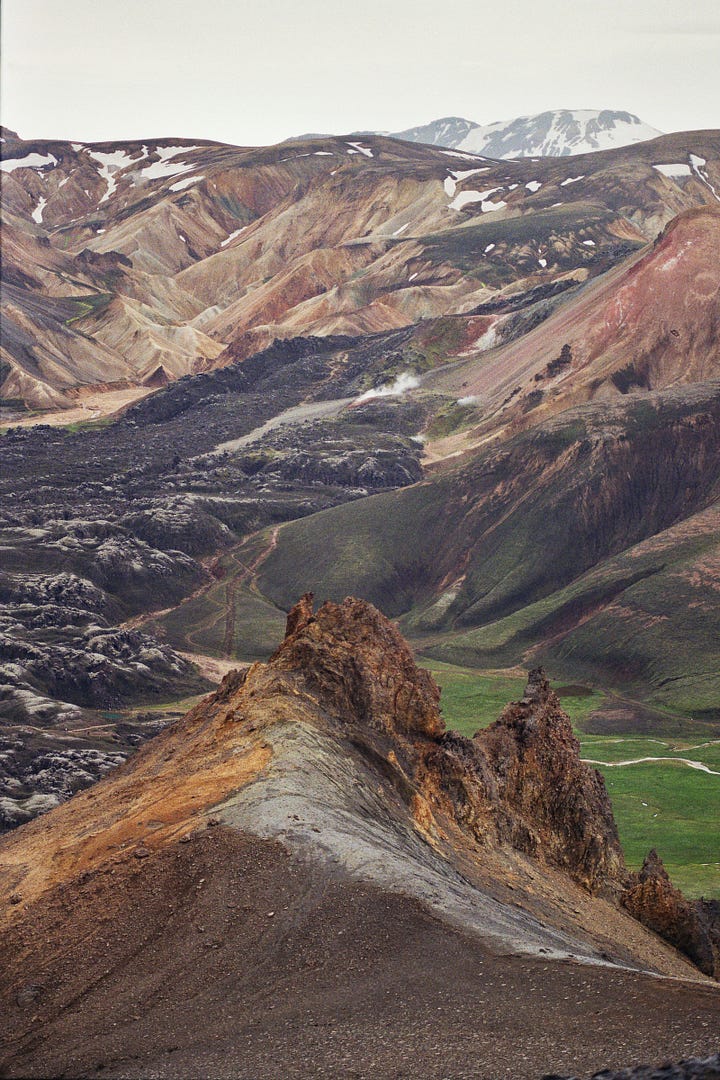
Outside our hut is a gateway to another planet. The path leads from the camp through a 500-year-old lava field, the jagged black stone overgrown with the palest moss that from afar looks like powdered snow. We descend into a wide plain threaded with silver ribbons of rivers, the soft white heads of cotton grass bobbing in the breeze.
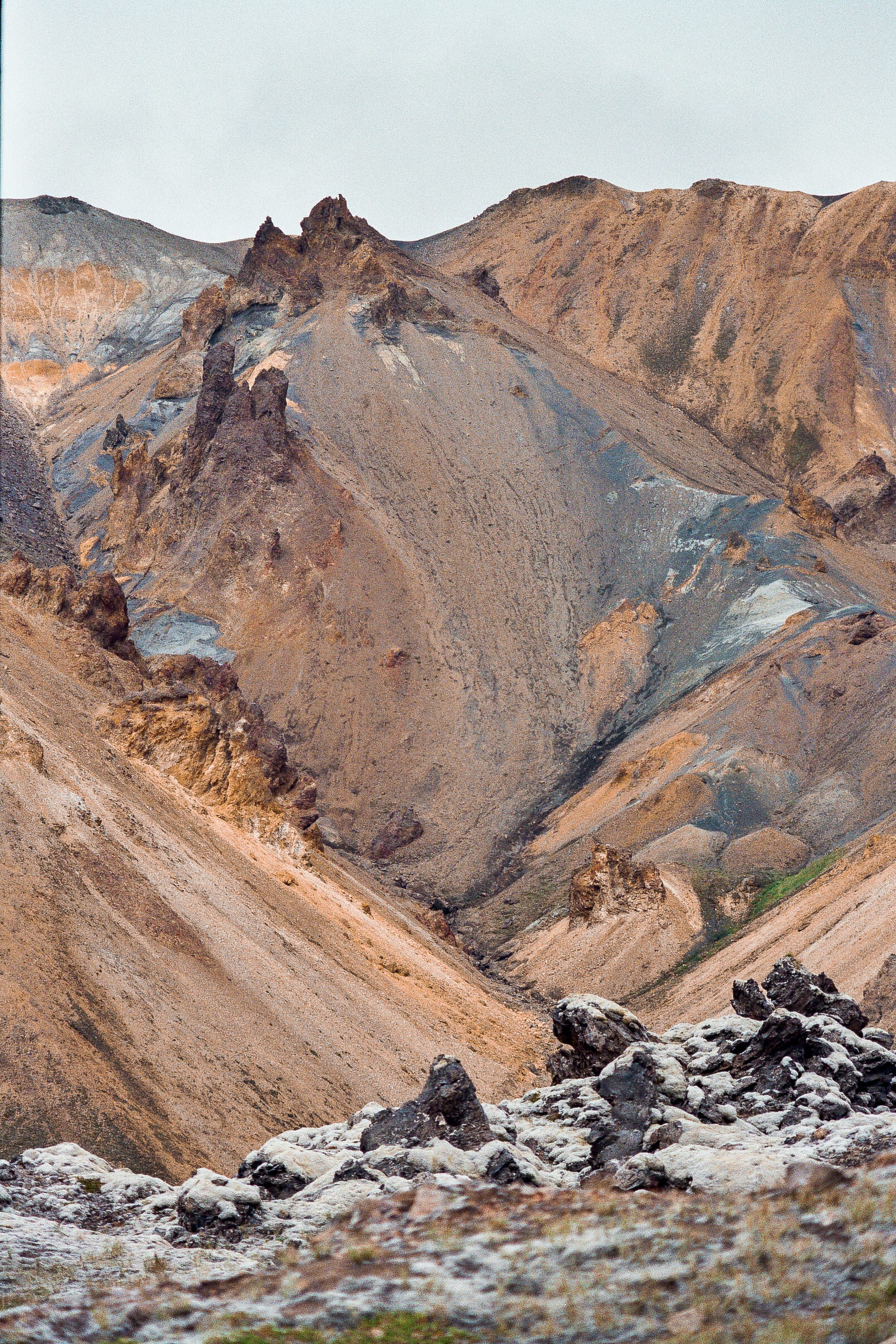
We cross the plain and the shallow rivers, ascending into the mountains, higher and higher, the view at every new stop along the way becoming more beautiful than the last.
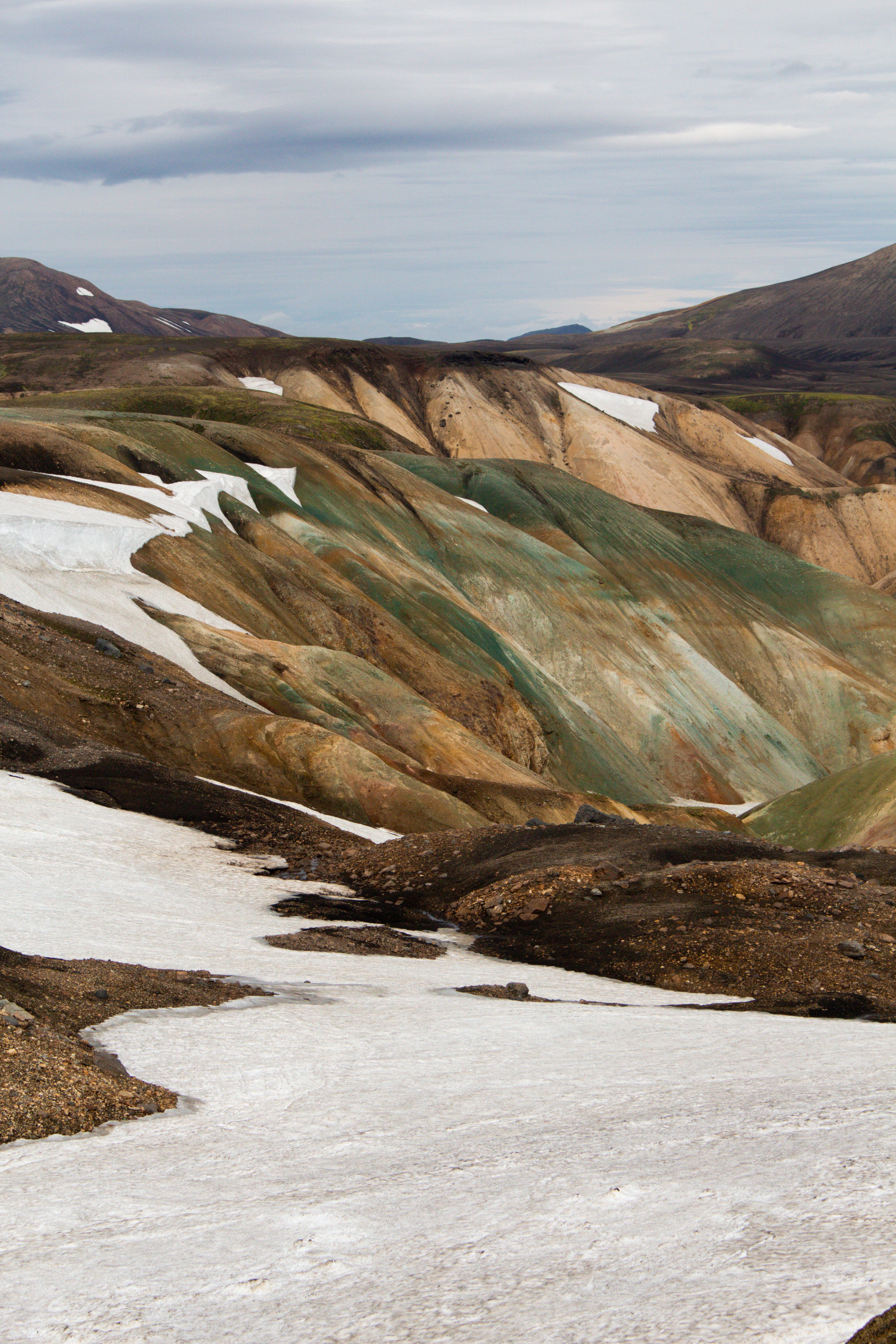
The mountains are rainbows. They have been painted by a loose hand, by an impressionistic eye; colours have been mixed seemingly randomly and without purpose, but they capture the light just so, and hint at a secret I am only just beginning to comprehend. A splash of copper-green here, a dash of sulphurous yellow there, a sprinkle of black obsidian, and entire swathes of iron red, pink rhyolite and the blue-grey mystery of volcanic ash. Blankets of snow are thrown over the hips of hills, the remnants of a slumbering winter.
We walk along the plateau to the north of camp, the yellow ground a striking contrast against the blue mountains fading northward into high blue sky. From here, we look down onto the lava field, which appears as an immense tree growing from deep within the earth, pouring out into the valley, its liquid branches hardening over centuries, cracking open under the pressure of time, now wizened and bearded with moss. To see the path of lava so clearly, to picture its flaming course through the flanks of mountains and into the shallow bowl of the plain in black waves of compacted ash, is to see the violence of eons. It is a non-stop opera of violence, of creation. The earth is tearing at the seams, pulling apart the whole island. But lava is forever filling in the gaps, gushing out of the earth’s blazing heart in rivers of fire and ash, burning, burning, but also forming, creating, building. Here the earth is still young in comparison to some of its older siblings on other continents. Here it still has growing pains noticeable within a human timeframe. We can witness this young earth changing, see the creation of a continent in real time — and ourselves and our little lives against the vast backdrop of geological drama.
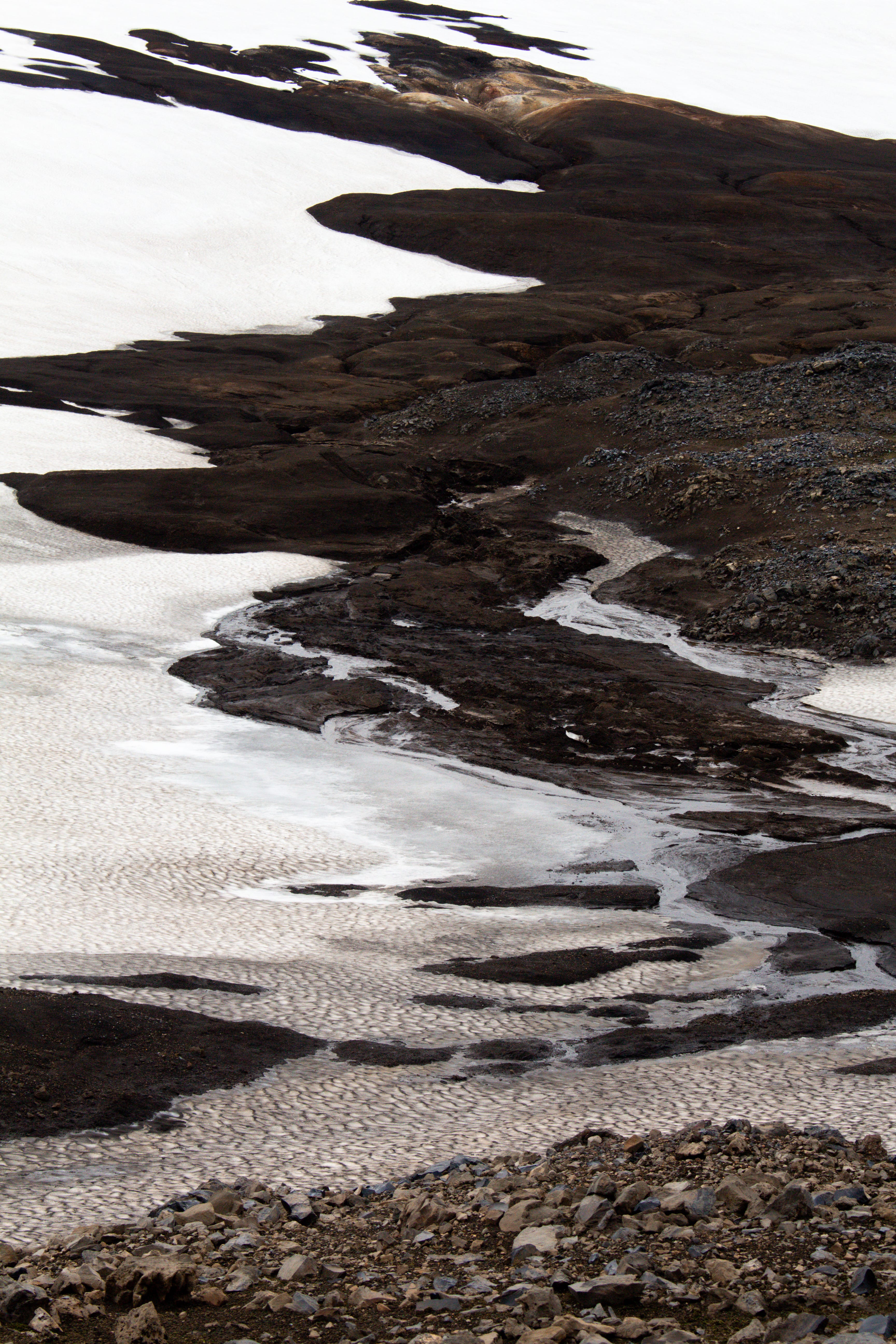
The next day of hiking, now on the Laugavegur trail, takes us through 25 kilometres of these otherworldly scenes. Painted mountains, hot springs, steaming trails of sulphur, pools of ice. In the afternoon the weather sours, and we march through pouring rain and biting wind, our feet and hands slowly losing feeling as we cross ice shelves and deserts of gleaming obsidian, shrouded in mist.
Finally, we arrive at our destination, the hut at Álftavatn lake. Everyone is drenched and freezing, ready for a warm meal and sleep. To our horror, we learn we are to share the 6×10-meter dorm with 32 other people. We can hardly move in the cramped space, and everyone’s wet socks and thermals are dangling from the beams and bed posts to dry. But outside the wind is howling, whipping the rain into a needling frenzy, and I am grateful not to be in a tent.
The following day is easy-going. We walk across floodplains stretching for miles, all black volcanic rock scraped away by millennia of receding ice. It is a black desert, the Mýrdalsjökull glacier and moss-covered peaks looming on its edges.
As we walk for hours on this barren ground, my parents and I drift casually between topics, as one does on hikes, until we come to one which has always interested and occupied me: namely, how to shape a life.
“There are just so many directions any life can take,” I lament. “What if I had done this and not that? I would have met these people and had these experiences, but not those. Every decision changes the course of your life, putting you on one path while occluding a hundred other paths!”
My father only laughs ruefully.
“I wish I could just have one big revelation of yes, this is what I want to do, what I want to dedicate my life to and what will make me happy,” I continue. I vaguely remember a Virginia Woolf quote, from To the Lighthouse, of great revelations never coming and matches struck in the dark. I make a mental note to look it up later. We walk on, talking of other things.
Our hut for the evening is nestled between low hills, flowers everywhere for the first time in days, white peaks rising all around us, straining against their own weight, steeped in gold. A giant tongue of glacier, the smallest finger of Mýrdalsjökull, overshadows the valley. Rivers flow from it like loose threads.
With one bar of cell signal, I find the Woolf quote:
What is the meaning of life? That was all – a simple question; one that tended to close in on one with years, the great revelation had never come. The great revelation perhaps never did come. Instead, there were little daily miracles, illuminations, matches struck unexpectedly in the dark; here was one.


Leave a Reply